SOAP BUBBLES IN SCIENCE AND THE ARTS: A STORY THAT BEGAN LONG AGO
Soap bubbles have long been considered a fascinating subject of study across an extraordinary variety of fields: mathematics and chemistry, physics and biology, architecture and art, design and advertising. The story of soap bubbles began centuries ago and it is still being written today.
THE HISTORY OF SOAP BUBBLES: BEGINNING IN THE 16TH CENTURY
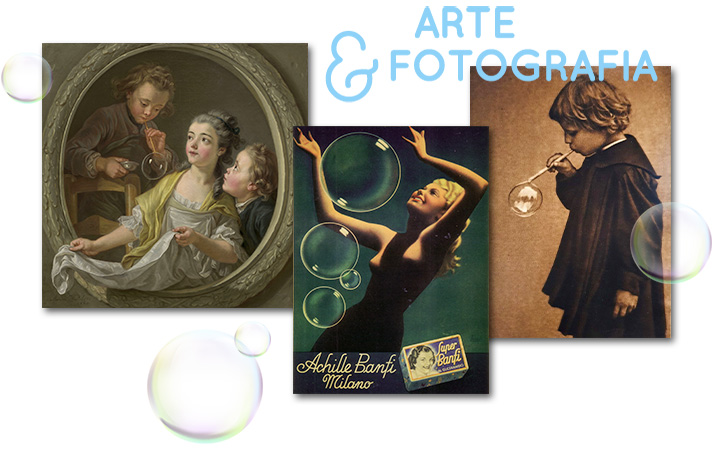
Since the 1500s, soap bubbles have fascinated generations of artists through the shimmering colors moving across their delicate surfaces and through their luminous yet fleeting nature. They became symbols of human fragility in the works of painters such as Rembrandt, Chardin, and Manet, to name just a few. During the 19th century, soap bubbles also began appearing in prints, engravings, photography, and advertising posters, including the famous Pears Transparent Soap poster created by British painter and illustrator Millais.
Soap bubbles have also inspired many scientists especially mathematicians who sought to understand the laws governing their shape and geometry.
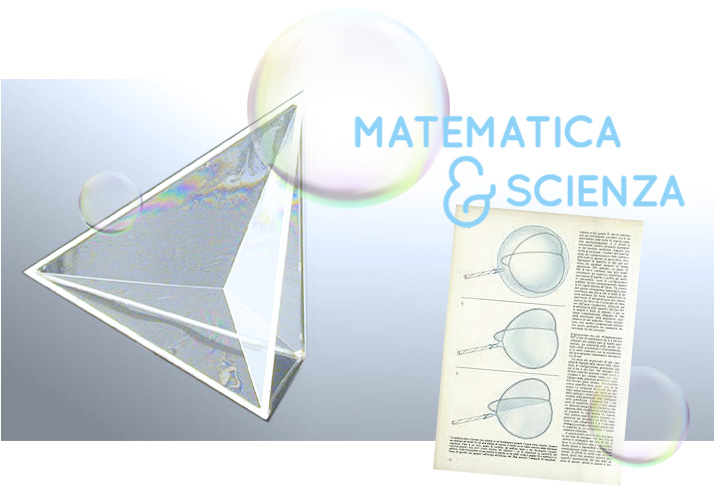
The studies of Newton and Plateau, for example, laid the foundations for the modern theory of minimal surfaces, demonstrating that the spherical shape of a soap bubble represents the minimum possible surface needed to contain a given volume of air. Similarly, when a metal frame is dipped into soapy water, the resulting shapes naturally follow the principle of minimum energy, creating the most efficient structures possible.
Applying this same principle to urban planning makes it possible, for example, to solve the famous Traveling Salesman Problem, helping identify the shortest possible network of roads, cables, or communication routes connecting multiple locations while optimizing construction costs.
SOAP BUBBLES IN ARCHITECTURE
Soap bubbles are not just a children's game: they can help solve challenges related to traffic systems, architectural design, economics, and much more.
Soap films have also gained an important role in contemporary architecture. Have you ever watched a football match at the Olympic Stadium in Rome or Munich?
Those suspended membrane roofs covering the spectators were designed using soap film models.
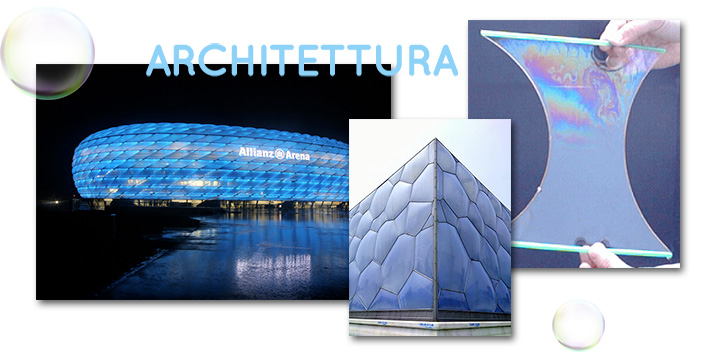
The first architect to explore this idea was German architect Frei Otto.
The true architectural triumph inspired by soap bubbles arrived with the construction of the Water Cube, the Olympic Aquatics Center built for the 2008 Beijing Olympics, designed by Ch. Bosse, J. Bilmon, and M. Butler. Here, architecture and human environment merge together while balancing functionality, innovation, and visual wonder.

TODAY, SOAP BUBBLES ARE BUBBLE WORLD!
It is no surprise, then, that soap bubbles remain a timeless game loved by every generation one of those simple pleasures capable of enchanting both children and adults alike. Today, you can order Bubble World soap bubbles online at bubbleworld.com, where you will discover an entire world of Bubble World bubbles: from licensed character collections to customizable bubbles designed to make every occasion magical and unforgettable.
"Blow a soap bubble and observe it: you could spend a lifetime studying it."
(Lord Kelvin, 19th-century Irish physicist)